

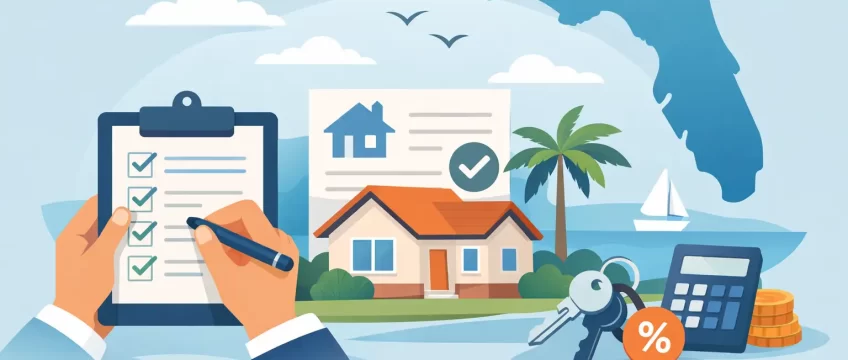
You do not want to fall in love with a home in Orlando, Tampa, or Miami and then find out your financing is not ready. That is why understanding how to get mortgage preapproval in Florida matters early. Preapproval gives you a clearer budget, shows sellers you are serious, and helps your home search move faster when the right property hits the market.
For many buyers, preapproval sounds bigger and more complicated than it really is. In practice, it is a lender reviewing your income, credit, debts, assets, and basic financial picture to estimate how much they may be willing to lend you. It is not the same as final loan approval, but it is one of the most useful first steps you can take before touring homes.
What mortgage preapproval means in Florida
A mortgage preapproval is a written estimate from a lender stating the loan amount you may qualify for, along with likely loan terms. Sellers and listing agents in Florida often expect buyers to have this in hand before submitting an offer, especially in competitive areas and price points.
Prequalification is lighter and usually based on information you provide without full verification. Preapproval goes further. The lender typically pulls your credit, reviews documents, and checks whether your debt-to-income ratio and funds line up with loan guidelines. That makes your offer stronger and your timeline more realistic.
Florida buyers should also know that preapproval is only one part of the puzzle. Insurance costs, property taxes, HOA fees, and flood zone considerations can change the true monthly payment. A home that looks affordable on paper can feel very different once those Florida-specific costs are added in.
How to get mortgage preapproval Florida buyers can actually use
The best preapproval is not just a letter with a big number on it. It is a realistic approval based on your comfort level, not just the lender’s maximum. Start by choosing a reputable lender who communicates clearly and can explain your options in plain language.
Step 1: Review your finances before you apply
Before a lender ever looks at your file, take a quick inventory of your income, savings, monthly debts, and credit profile. You do not need perfect credit to buy a home in Florida, but you do need to know where you stand. If your credit score is lower than expected, or your debt is high compared with your income, it may be worth making a few adjustments before applying.
Look closely at your monthly obligations. Car payments, student loans, credit cards, and personal loans all affect how much house you may qualify for. If you are self-employed, receive commissions, or have variable income, expect more documentation and a little more scrutiny.
Step 2: Gather the documents lenders usually request
Most lenders will ask for recent pay stubs, W-2s, tax returns, bank statements, and a government-issued ID. If you are self-employed, they may want two years of tax returns, profit-and-loss statements, and business bank records. If you receive child support, retirement income, or other qualifying income, you may need to document that as well.
This part matters more than many buyers realize. Missing pages, large unexplained deposits, or outdated statements can slow things down. Clean paperwork helps your lender issue a stronger preapproval and reduces last-minute stress later.
Step 3: Let the lender pull your credit
A real preapproval usually involves a hard credit inquiry. That can cause a small, temporary score impact, but it is generally worth it if you are serious about buying. The lender will use your credit history to evaluate risk and determine which loan programs may fit.
If you are shopping lenders, try to do it within a focused window of time. Multiple mortgage-related inquiries within a short period are often treated as one inquiry for scoring purposes. That gives you room to compare without damaging your credit the way many buyers fear.
Step 4: Discuss loan options, not just loan amounts
One of the biggest mistakes buyers make is focusing only on the maximum purchase price. A better conversation is about monthly payment, cash to close, and the type of loan that fits your goals.
In Florida, buyers may consider conventional loans, FHA loans, VA loans, USDA loans in eligible areas, or programs tied to down payment assistance. Each option has trade-offs. FHA can be more flexible on credit but includes mortgage insurance. Conventional may require stronger credit but can be more cost-effective over time. VA can be an excellent benefit for eligible buyers, while assistance programs can help with upfront funds but may come with income limits or extra steps.
Step 5: Ask for a preapproval based on your target range
Once your documents are reviewed, the lender will issue a preapproval letter. Ask whether they can tailor the letter amount to the offer you plan to make rather than showing your top limit every time. In negotiations, there is often no advantage to advertising the highest amount you can spend.
A strong preapproval should also come with a conversation about what is comfortable for your household. Just because a lender approves a certain amount does not mean it is the right budget for your lifestyle.
Florida costs that can change your approval comfort zone
This is where local guidance makes a real difference. Florida is not just about principal and interest. Property taxes vary by county. Homeowners insurance can be significant, especially for older homes, coastal properties, or homes with prior claims history. If the property is in a flood zone, flood insurance may be required. Condo and HOA fees can also reshape affordability quickly.
That means a buyer approved for one amount may need to aim lower depending on the city, neighborhood, or property type. A single-family home in one part of Central Florida may carry a very different monthly ownership cost than a condo in South Florida, even at a similar price.
What can delay preapproval
Most delays come from avoidable issues. Buyers change jobs, move money between accounts without a paper trail, open new credit cards, or make large purchases while the file is being reviewed. Even if you are only at the preapproval stage, it is smart to keep your finances steady.
Another common issue is misunderstanding deposits. If a lender sees a large deposit in your bank account, they may ask where it came from. That does not mean you did anything wrong. It just means they need documentation. Gift funds, sale proceeds, or cash deposits all need to be explained clearly.
For self-employed buyers, the timeline can be longer because lenders often need a deeper look at income stability. If that is your situation, start early and be ready for more back-and-forth.
How long preapproval takes and how long it lasts
Some lenders can issue a preapproval within a day if your documents are complete and straightforward. Others may take several business days. The timing often depends less on the lender’s speed and more on how organized the file is.
Most preapproval letters are good for 60 to 90 days, although policies vary. If your search takes longer, your lender may need updated pay stubs, bank statements, or a fresh credit review. That is normal. In a shifting rate environment, your approval terms can also change over time.
Should you get preapproved before choosing an agent?
You can do it in either order, but the smoothest path is usually having both conversations early. A good real estate team can help you think beyond the list price and connect you with lenders who are responsive, clear, and experienced in the markets where you want to buy. The VanCruz Group often sees buyers make better decisions when financing and home search strategy are working together from day one.
That said, the lender is not there to replace your agent, and your agent is not there to replace your lender. The strongest experience comes when both are communicating well and keeping your goals at the center.
How to make your preapproval stronger
If you want the best chance at a smooth offer and closing process, keep your financial picture steady. Pay bills on time, avoid taking on new debt, and do not make major purchases before closing. Make sure your bank statements are easy to understand and your down payment funds are seasoned and documented.
It also helps to be honest about your comfort level. Some buyers want the highest approval possible. Others care more about keeping room in the budget for repairs, childcare, travel, or future investments. There is no single right answer. The right number is the one that supports your life after closing, not just your purchase today.
When preapproval is especially important in Florida
If you are relocating from another state, buying in a fast-moving market, using down payment assistance, or purchasing as a first-time buyer, preapproval becomes even more valuable. It gives you a roadmap. It also helps you move faster when the right home appears, which matters in markets where good listings do not sit long.
For investors, preapproval is just as useful, though the loan review may look different depending on whether the property is owner-occupied, second home, or investment. The more specific your strategy, the more important it is to work with a lender who understands the loan type you need.
Buying a home in Florida can feel like a lot at first, but preapproval turns uncertainty into a plan. Start earlier than you think, ask direct questions, and treat the process as a tool for clarity rather than a hurdle. The right preapproval does more than tell you what you can buy – it helps you move forward with confidence when home starts feeling real.